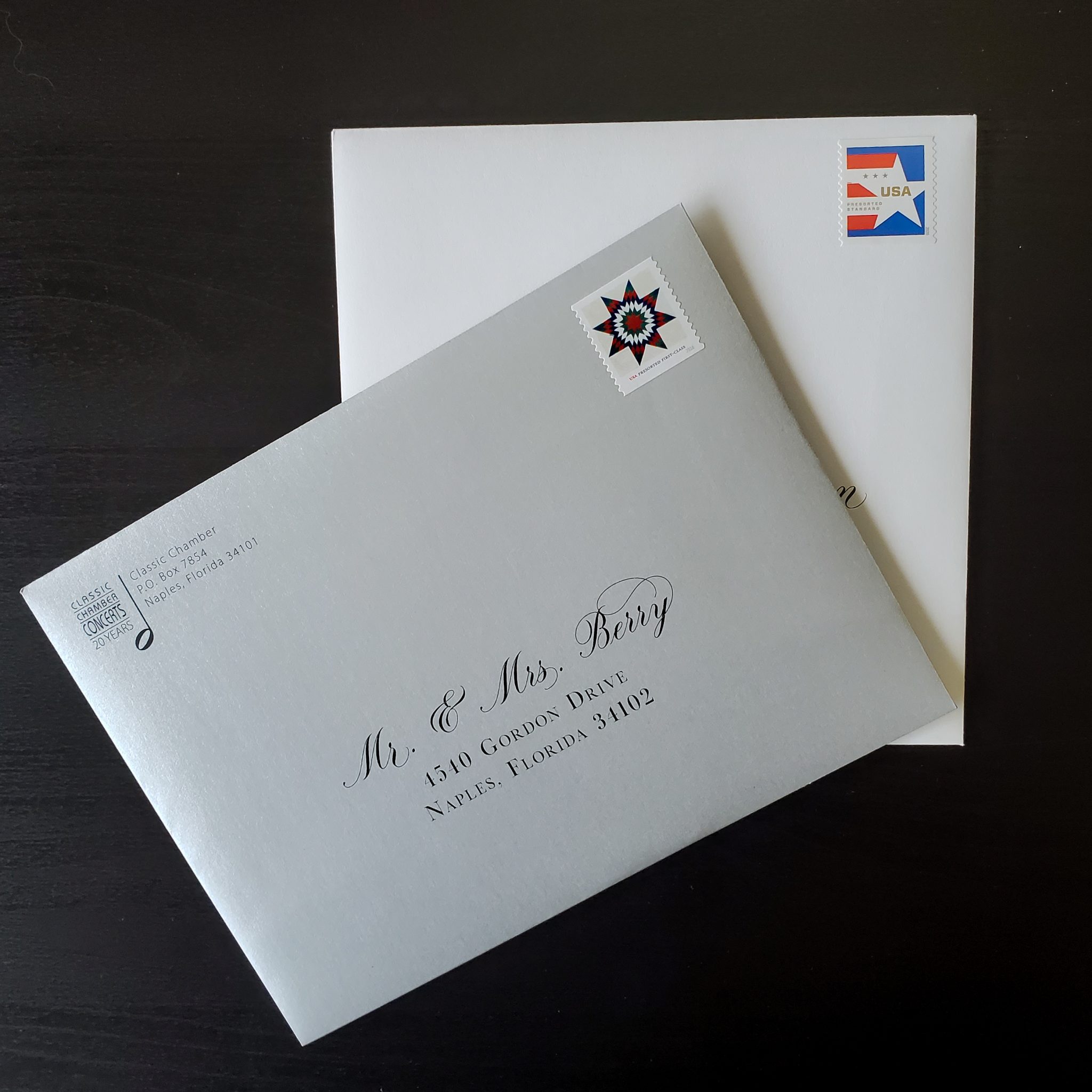
Questioning the effectiveness of direct mail? The truth is
that in our technology-obsessed world, direct mail marketing still delivers impressive
results.
According to an Adage article, the Direct Marketing Association reports that, “direct mail is 10 to
30 times more effective than email.”
In fact, direct mail response rates have been relatively stable
since 2010. Additionally, when comparing response rates in the same study, 34 out of 1,000 customers responded to
direct mail marketing while just 1 out
of 1,000 customers responded to email.
A Huffington Post article using data compiled by Epsilon found
similar results. This study finds that consumers “prefer direct
mail over email about brands or products in almost every category, including
financial services (36 percent to 8 percent), insurance (36 percent to 9
percent) and travel (21 percent to 13 percent).” The same study indicates that 50 percent of U.S. consumers prefer direct mail to email.
So if we’ve piqued your interest in direct mail marketing,
here are some suggestions on where to start.
Market to your own
customer list: According to Marketing Sherpa it costs 5-7 times more
to acquire a new customer than it does to sell more to an existing
customer. Your list of existing customers
is a veritable gold mine.
If you’re concerned that your
customer list is not up-to-date, please contact us. Take advantage of the
sophisticated mailing software that we have which automatically searches the
USPS national change-of-address database and tells you not only who’s moved,
but it also provides their new address.
Find new prospects with Every Door Direct Mail. Have you heard of Every Door Direct Mail? You can
send snail mail marketing that’s targeted by neighborhood for postage of just
16 cents apiece. You don’t even need to purchase a database when you use Every
Door Direct Mail. Contact us to get a free count for the areas that you want to
target.
If you’ve dismissed direct
mail as old-fashioned or ineffective, it’s time to reconsider. Not only does
direct mail generate substantially higher response rates, but customers across
a broad range of industries prefer it to email marketing.
Like what you're reading? Have you signed up for our weekly enews yet or are you following our blog's rss feed?
It’s a simple fact that your bulk mail campaign can’t get dropped off or delivered if the U.S. Post Office is closed. With this in mind, it’s critical that you keep USPS holidays in sight.
Unfortunately, on some the lesser known holidays most of us are still hard at work while our government counterparts get a day off of work; this is why it’s easy to overlook these key days when the US Post Office will be closed.
Another reason it’s easy to miss postal holidays is because six of the ten days that the U.S. Post Office is closed in 2013 fall on Mondays. This means if you don’t get your campaign mailed by the preceding Friday, you’ll have to wait three days to get it in the mail. If you're a marketer, you need to be aware of all of these dates; they are essentially black-out days for bulk mail marketing.
This short post will give you the low down on everything that you need to know to keep your critical marketing campaigns on schedule in 2013. Here are the days that the USPS will be closed in 2013:
Tuesday, January 1 New Year’s Day
Monday, January 21 Birthday of Martin Luther King, Jr.
Monday, February 18 President's Day/Washington’s Birthday
Monday, May 27 Memorial Day
Thursday, July 4 Independence Day
Monday, September 2 Labor Day
Monday, October 14 Columbus Day
Monday, November 11 Veterans Day
Thursday, November 28 Thanksgiving Day
Wednesday, December 25 Christmas Day
What other changes by the USPS will impact bulk mailers in 2013? On January 27th, 2013 there is a postal rate increase; click here for details.
The USPS also implemented new tabbing standards for letter sizes bulk mail that is mailed without an envelope.
Finally, the mandatory adoption of the Intelligent Mail Barcode by the USPS goes into effect on January 27th.
Anything else I should know about postal holidays? If you’re in a smaller market, there may be additional days that the Business Mail Unit will be closed due to staffing issues. Most Business Mail Units will post a notice, but it’s always a good idea to ask if there any additional closures or restricted hours around holiday periods.
Bulk mail or presort standard mail (often referred to as 3rd class mail) is the last in line for attention by the USPS. Nonprofit bulk mail is treated the same as standard bulk mail from a delivery urgency point of view.
During postal holidays, the whole mail system can get backed up, and in addition to the day lost for the holiday, there’s a very good chance that an additional day or two can be lost as the USPS gets back up to speed. With this in mind, it’s always a good idea to avoid scheduling time-sensitive mailing projects to drop the day before a USPS holiday.
Can I drop my bulk mail campaign on a Saturday? Although the USPS currently delivers mail on Saturday, the Business Mail Unit of the US Post Office is not opened on Saturdays. You can, however, drop Every Door Direct Mail Retail campaigns on Saturdays.
Bulk mail projects involve successful coordination of many small steps, with delivery to the post office being the final step. Showing up at the post office on a postal holiday is a nightmare. Dropping your bulk mail project the day before a postal holiday can substantially delay delivery. Don’t risk blowing your critical deadlines by being unaware.
Pay It Forward: Please use the share buttons below to send this post to any friends or coworkers who are responsible for direct mail projects. You never know when sharing some important information like this can prevent a direct mail disaster.
Like what you're reading? Have you signed up for my weekly enews yet or are you following my blog's rss feed?
If you send folded marketing mail that's not in an envelope, then you need to get
up to speed quickly on the new tabbing regulations from the USPS that take
effect on Saturday, January 5th, 2013.
These new USPS rules will require you to pay attention to a
variety of factors including:
the location of your tabs
the size of your tabs
the weight of your mailer
the required number of tabs
the thickness of the paper that you use
the orientation of the fold
inclusion of a staple
Raise your hand if you like more rules. Of course you don't
but, the USPS has indicated that their rationale for these stricter rules is to
assure that your mail piece actually makes it through the mail without being
destroyed.
Let's face it, there's not much point in investing money in
direct mail marketing if there's a good chance that your piece won't make it through
the mail, so I have to admit that the rationale behind these changes does make
sense.
Everyone sees USPS employees out delivering the mail, but
what most people don't realize is the complex and expensive sorting equipment
that the USPS uses to route the mail to the correct location. It's these pieces
of equipment that "eats" tabbed mail that is not prepared based on these new guidelines.
New rules apply to letter-sized
folded self-mailers only: Before reading further, you should know that
these new regulations will only apply to letter-sized mail pieces.
For self-mailers we're
talking about pieces of mail that measure 6" x 10.5" or smaller when dropped into the mail-stream.
Note: the minimum size is 3.5” x
5”. For mail pieces that are not
considered self-mailers (like
postcards and letters in an envelope) size requirements are slightly different.
In my experience, the most common example of a self-mailer is
the typical nonprofit newsletter, that gets folded down to 8.5” x 5.5” and
mailed without an envelope.
Here are a few things that will disqualify your
mailer right away:
self-mailers that use only 1 tab
using tabs at the bottom of your mailer
using perforated tabs
self-mailers with a gate-fold
paper that is too thin
Letter size bulk mail should always be designed so that it folds at the bottom and tabs at the top.
How thick does my
paper have to be? Standard copy paper won't cut it anymore for
self-mailers. The minimum paper thickness is either 28# bond or 70# text weight
paper. Self-mailers printed on paper thinner than this will not be accepted by the USPS.
If you're mailing a document that uses more than 1 sheet of
paper (for instance a newsletter), then the thickness requirement only applies
to the outermost sheet of paper.
How many tabs do I
need? All letter-sized bulk mail pieces will require at least 2 tabs, and in some cases 3 tabs. Self-mailers,
like the sample below with just one tab placed in the center will be rejected.
Does the location of
the tab matter? Yes, the location of the tab is critical! The edge of all
tabs must be within 1" of the corner. Please carefully review the samples
below. The top sample would be rejected by the USPS; however the bottom sample
would be acceptable.
In addition, to being placed along the top of the mailer,
tabs may instead be placed along the sides. In this scenario, the edge of the
tabs must still be within 1" of the corner. The samples below shows an acceptable example of tabs used on the side; notice the tab is within 1" of the corner.
Is your self-mailer
stapled? Anything with a stitch or staple is considered a booklet.
All letter-sized booklets will require 3
tabs. Said another way, anything that includes a staple must use 3 tabs.
The location
of the third tab is important because the USPS equipment grabs your mail piece
from the bottom right hand side, so
they want the third tab to be on the bottom right hand side. As with the other
tabs, the far edge of the tab needs to be within 1" of the edge.
The photos below show two examples of approved tabbing for booklets/stapled mailers.
How many pages can I
include in my self-mailer? If you have several pages, and opt not to staple, you are limited to how
many pages you can use based on how you fold your self-mailer:
unstapled, bi-folded
mailers are limited to six
8.5" x 11" sheets (or three 11" x 17" sheets)
unstapled, tri-folded
mailers are limited to four
8.5" x 11" sheets (or two 11" x 17" sheets)
For letter-sized, stapled self-mailers, your mail piece can
weigh a maximum of 3 ounces and must be less than 0.25" thick. Remember,
stitched mailers require a third tab
placed 1" from the bottom right hand corner.
What about tri-folded
mailers? In terms of tabs, the same requirements apply for tri-folded,
self-mailers, but the requirements are even more specific. The center panel must be used for
printing the address, and the final fold must fold up in the back. If you're
having a hard time picturing this, just remember that self-mailers must tab
from the top, and tri-folded mailers must have their address printed in the center panel.
How much does your
mailer weigh? If your mail piece ways more
than an ounce, you will be required to use tabs that measure at
least 1.5" across, most
standard tabs, and all the tabs pictured in the photos included in this article
measure 1".
Other considerations:
In lieu of tabs, glue dots may be used. The glue dots need to be a minimum of
3/8" thick and need to follow the same guidelines as tabs in terms of
distance from the edge, and number of required glue dots.
I confirmed with the USPS and another viable alternative is to use clear, transparent tabs instead of the more standard white opaque tabs.
Plan ahead to avoid issues with your next bulk mailing. If
you're unsure, it's always a good idea to stop by your local Bulk Mail Unit with
a sample. Ask for feedback on your sample piece, before you design and print
all pieces.
What should I do if I
already printed my mail piece and I'm stuck? If your mail piece is already
printed and the paper is too thin, or it's designed to fold incorrectly, you
can always just mail it in an envelope.
If your mail piece is printed on a standard 8.5" x
11" sheet, it will fit nicely in a standard 6" x 9" envelope and
still qualify to mail at the letter rate. In the worst case scenario, if your
addresses are already printed too, you may be able to use a 6" x 9" giant
window envelope like the sample pictured below.
Of course, if you rely on your mailings to generate new
business or collect donations from your supporters, and you want to avoid the
complexities of mailing, we invite you to please contact us to see how we can
help get your next mailer designed, printed, addressed and mailed.
In case it's not apparent from this short article, we sweat
the small stuff to make sure that our clients mailing is designed, printed and
prepared in a manner to meet all postal guidelines while saving the maximum amount
on postage.
Of course please also feel free to contact us with your
questions or share your comments below.
Like what you're
reading? Have you signed up for our
weekly enews yet or are you following our blog's rss feed?
If you use or are planning to use Every Door Direct Mail for
marketing, you need to read this.
The USPS recently made substantial changes to the Every Door
Direct Mail website.
I process Every Door Direct Mail campaigns on a daily basis
and struggled to output the correct paperwork as a result of these changes.
In fact, if you are a professional bulk mailer or have an
active bulk mail permit with the USPS, the changes for you are the most complex,
and you'll need to skip to the bottom of this post to view the only viable
work-around that I've found for Every Door Direct Mail Retail for permit
holders.
What's changed?
Essentially the entire navigation of the site has changed when you log in. In
the old system, when you logged in, you saw the image below.
While the new portal looks like this.
In the old system you first had to identify if you planned
to do "EDDM Retail" or "EDDM BMEU." If you're not sure
which applies to you, the vast majority of you reading this would normally
select "EDDM Retail."
What's confusing about the new EDDM portal is that you're
brought directly to a screen the forces you to start by selecting your geography
first without selecting EDDM Retail/EDDM Retail. If you are a permit holder,
the system defaults to "EDDM BMEU" and as the EDDM website is
currently set up, it's impossible to change it to “EDDM Retail.”
Certain clients I work with want to exclude businesses and target residential addresses only. I
struggled with how to do this on the new site until I noticed the "mailing
options" button directly under and to the right of "Select Deliveries"
title. By clicking "mailing options" you can specify if you want to send
your mail to "Business & Residential" or "Residential
Only."
To add to the confusion, selection of your target geography
is completely different. In the previous system there were 4 distinct tabs at
the top: By City, By County, By Zip Code, By Location. Directly below is a screen
shot of the old version with the tabs across the top.
The new version has no tabs (and no instructions).You can
still search by City, Zip code or by using a specific address, but as best I
can tell, you can no longer search by county.
After you select your geography, the next step is to pick
your expected delivery date to the USPS. I suppose if the actual date that you
drop off your EDDM differs from the date that you entered on the EDDM website,
you could just cross out the date and initial it; however, there's no guarantee
that your post office will accept paperwork like this.
It then makes you select your company name from a dropdown.
This is puzzling to me since at this point, you've got to be logged in and it
already has your company information.
Before you can complete your transaction, you’ll need to be
sure to check the legal disclaimer box that says “I understand and agree to the
terms and conditions.”
At the EDDM Retail check out, you are given the option to
"Pay At The Post Office" or "Pay Online."
If you opt to "Pay At The Post Office" you'll get
a screen that looks like what you see directly below.
This screen contains links to the paperwork that you'll need
to print and bring with you to the specified post office. It includes PS Form
3587-B which is your 2-page "Mailing Statement." Your Mailing
Statement will be prepopulated with your CRID # and the name and address of
your business info. This page also contains a link to a Facing Slip that you’ll
need to copy and insert between every 100 mail pieces.
If you close out of your EDDM paperwork too quickly, don't
worry because you also receive an email confirmation with a link to print the
same forms if needed.
If instead you click on "Pay Online" you will be
brought to the screen below.
You will have to prepopulate your credit card info in order
for everything to work correctly. Your credit card will not be charged unless you click the blue "checkout"
button. You can always click "clear shopping cart" if you want to
cancel the entire transaction. I tested this, and it works fine.
If you have an active
bulk mail permit then you need to continue reading. As the EDDM site is
currently configured, you will be unable to process an EDDM retail campaign if
there is a bulk mail permit tied to your CRID number. There is simply no option
for "EDDM Retail" offered to you.
The two workarounds for you as a permit holder are: #1) Have
your client sign up for their own CRID # and use their CRID # and information
to process the EDDM Retail Campaign. This is problematic because you most
likely won’t have their password and login information. #2) Sign up as a
different business entity through the USPS Business Customer Gateway. If you
have a DBA name, perhaps you can sign up for a second USPS ID using the name of
your corporate entity or vice versa. This second ID will be uncoupled from your
business permit and will enable to you process EDDM Retail mailings.
Here's a link to sign up at the USPS Business Customer
Gateway or, if you’re completely new to Every Door Direct Mail, here’s a link
to my tutorial for signing up the first time.
Searching for your
target area: The map feature seems to be improved in this newer version. If
you input a zip code or specific address and hover over the individual carrier
routes, the map will highlight the location of the corresponding carrier route.
The maps now list a few neighborhood names which helps from an orientation point
of view, but it still appears as if the majority of neighborhoods are unlabeled
on the USPS maps on the EDDM site.
As a bulk mail professional, and a proponent of Every Door
Direct Mail, I'm certainly disappointed with the inability for permit holders
to select EDDM Retail when logged in and I hope that this is eventually
changed.
For anyone without
a bulk mail permit, I suspect that once you get oriented with the new
navigation, you’ll find that this new site is probably more convenient because
of the improved map feature.
Like what you're reading? Have you signed up for my weekly enews yet or are you following my blog's rss feed?
Please contact me or include your comments below if you'd
like to contribute to the conversation or point out anything that I may have
overlooked.
What's in a name? If you've visited this blog before, you
know that I'm a big believer in personalized marketing. If you sign up for my
enews, you'll notice personalization in the subject line and in the body of the
email. I don't do this because I think it's cool (even though it is), I do it
because it increases my open rate and improves interaction with my readers like
you.
In case you haven't already signed up for my free enews, you
can click here. Of course by signing up, you'll also get to see examples of
personalization.
Personalized
Marketing from Big Companies: Don't take my word for it that
personalization works, take a look at the marketing communication that you
receive from large companies. I purchased a new Mazda earlier this year, and
just this week I received the mailer pictured below.
At first glance, this may look like your average marketing
piece, but upon closer inspection, you'll notice that my first name,
"Blase," is personalized on the license plate. Pretty slick! You can
click on the image above for a better view.
When the mail piece is opened, it references the specific
model car that I purchased and makes recommendations for service based on how
long I've owned the car. It also lists the address, phone number and service
hours of the Mazda location closest to me.
This is just one example of the many personalized marketing
pieces that I receive each week. Each day that goes by smart companies, both
larger and small, are leveraging their customer data to personalize their
marketing communication. Yes, that's right, even smaller companies can utilize
personalized marketing; take a look at my recent post, Examples Showing The
Power of Personalization in Marketing.
Remember, your customers want to know what's in it for them.
The more personal and relevant your marketing piece is, the more likely they
are to respond to it. As the percentage of personalized communication
increases, your one-size-fits-all boilerplate communication will be more and
more likely to get lost in the shuffle.
What steps are you taking to leverage your customer data and
personalize your marketing? We specialize in personalized email and print communication.
I hope you'll, contact me if you need help getting started with
personalization.
How do you get someone's attention? Do you ever try using their name?
One of the most common pitfalls in marketing is obsessing about the offer, at the expense of getting your prospects' attention. You may have a ridiculously generous offer-perhaps even offering something for free, but if your prospects never see the offer, it's all for naught.
Your customers and prospects are bombarded with more marketing messages today than ever before. To get their attention, you've got to leverage whatever information you know about them. Typically, the easiest place to start is to address them by name.
In your haste to get your marketing campaign out the door, are you sacrificing personalization? It's probably much easier to personalize your marketing than you think. We'll share some creative examples below to give you a little motivation to incorporate personalization into your next marketing campaign.
Have fun with it! First of all, you need to understand that you're not limited to using text only when personalizing your marketing. Have some fun with it! Take a look at the unique personalized graphic that we created below for a recent postcard campaign.
We chose to use the foam in a latte cup to tie in with our "caffeine" themed campaign. Have you ever seen your name in foam? Bet it would get your attention. The tattoo artwork that we used in the next campaign was even more personal. Not only did we vary the name in the tattoo to match the name of each recipient, but we actually changed the tattoo graphic based on the gender of the recipient. Women received their tattoo on a man's bicep while men got their tattoo printed on a woman's ankle.
We also had some fun with this theme and talked about our customers' names being tattooed all over our work. Really, in both of the above examples, we're just scratching the surface with personalization. You can leverage almost any information that you have about your customers or prospects. Examples include the color of their eyes, their favorite sports team or where they went to school.
What about e-mail marketing? Personalization in e-mail marketing is just as powerful.
About 18 months ago, I started personalizing the subject line of my e-newsletter. The result was that my open rate instantly doubled, and it's remained that way ever since.
If you want to see how I use personalization in my e-newsletter, you can sign up here.
Remember, your marketing campaign is doomed to fail if you don't get your prospects' attention. Personalization is a very easy and very effective way to get their attention. Only after you have their attention will they look at your offer.
Today's technology has made it easier than ever to collect information about your customers and prospects. You can use this information to substantially improve the results of your next marketing campaign. If you like the samples that you've seen above, but you feel like you need help personalizing your next marketing campaign, I hope you'll please contact me.
Please use the comments section below to share your experience using personalization in your marketing.
I'm sorry to report that the USPS has taken a potential benefit to business mailers and turned it into yet another bureaucratic blunder.
I'm not down on the USPS, really I'm not. In fact, as a bulk mail professional I've got a vested interest in the success of the USPS, but the new Picture Permit Imprint Indicia program is a failure.
On the surface, this looks like a neat benefit to business mailers. In a nutshell, the program allows you to add graphics to the area where your bulk mail permit gets printed on your mail piece.
To participate, you need to have a bulk mail permit and you need to register on the USPS website. From my point-of-view these are reasonable requirements.
What are the Problems? Essentially, you've got to complete a postal decathlon before you can get approved to use a Picture Permit Imprint Indicia. As described by the USPS, there is a 4-step process before you can get approved.
Step #2: After you register, you have to complete the online Picture Permit application, (PS Form 3615A). Apparently registration is not sufficient, so for good measure, the USPS makes you fill out an additional form.
Step #3: Assuming your application gets approved by the USPS Program Management Office (PMO), you'll then have to submit a PDF copy of your proposed indicia design online.
Step #4: If/when your proposed design passes USPS review, you must then submit 500 hard copy mailpieces with the approved design. From the USPS website: "These mailpieces must be the exact mailpieces you intend to send. USPS Engineering, Operations and Acceptance will then test the designed mailpieces." This "test" takes approximately 30–45 days for the USPS to complete-wow, hope it's not any sort of time-sensitive mail.
By the way, if you think I'm exaggerating any of this, here's a link to the official USPS Picture Permit Imprint Indicia website.
Although, it's not considered its own step, there's actually a Step #5 because you have to preschedule the date for your mailing and let the USPS know exactly how many pieces you will be mailing on the scheduled day.
I'm actually recommending a Step #6 because I think the first five steps are just too easy. For the final step, approval should be contingent on travelling to New York City, visiting the top of the Empire State building and getting your picture taken with and signed by one of the Empire State building staff members.
Please if you're reading this and you know anyone who's gotten approval to send bulk mail using a Picture Permit Imprint Indicia, please have them contact me so I can issue them a medal for their heroic efforts. There’s more! But wait, if you actually navigate through the daunting, time-consuming, inconvenient process, you could still be denied because each bulk mail piece must contain an intelligent mail barcode. This is no sweat for me as a bulk mail professional, but it essentially excludes all smaller businesses and nonprofits, and almost certainly some smaller bulk mail professionals.
What, postage is actually higher when you mail with the Picture Permit Imprint Indicia? Yes, it gets even better though because there's a fee to use the service. That's right, if you elect to use the Picture Permit Imprint Indicia, you've got to pay an extra 2 cents apiece in postage for presort standard mail and extra 1 cent apiece for first-class pieces.
Why would anyone pay extra postage for this? The area where the permit gets added on a mailing is one of the smallest areas on a mailpiece. While it may look cool to theme the graphics for the permit with the rest of your mail piece, are you really going to see a return-on-investment from changing the way your bulk mail permit looks? I doubt it. Never mind the complexity and delays associated with getting approved in the first place.
A free alternative If your goal is to make your bulk mail look more like first-class mail, then instead you should consider using precancelled stampsfor free. That's right, here's an example of a USPS product available to bulk mailers that does not increase the cost of postage and has been proven to increase open rates over envelopes that contain a bulk mail permit or postal meter imprint.
I don't understand: if there's not extra postage cost to use precancelled stamps, why should bulk mailers pay a premium to use a Picture Permit Imprint Indicia?
Delays, complexity and extra fees. What could have been done correctly? Without a doubt, the USPS is under a tremendous amount of pressure and not in a very enviable position. They have made some good decisions, like last year's roll out of Every Door Direct Mail, but they've also made some other product blunders like this Summer's 2D barcode discount.
I still believe in the viability of direct mail marketing, and I firmly believe that business mailers need to be part of the USPS recovery plan. Programs like Picture Permit Imprint Indicia fall short of benefitting business mailers, the direct mail industry, and the USPS.
For the USPS to survive, the key is NOT to skim more money off the top of existing bulk mail customers. The key to generate additional USPS revenue is to broaden the base of business mailers. Success with this is contingent on offering business mail solutions that are cost-effective and easy to use. These types of products will not only generate more business from existing bulk mailers, but they will also encourage new businesses to start mailing.
Like what you're reading? Have you signed up for my weekly enews yet or are you following my blog's rss feed?
What do you think? Did I miss the mark here? Please share your comments below.
Let's face it, you don't like to waste money. Nobody does, but to grow your business and keep it healthy, you've got to invest some money in marketing.
You want to do everything possible to assure a healthy return on your limited marketing budget.
Savvy marketers like you realize that you can't just market using a single channel. I'm a proponent of social media marketing, blogging and e-mail marketing, but I still see my best returns with traditional marketing including direct mail marketing.
I've been helping entrepreneurs, fellow marketing professionals and nonprofits with direct mail marketing for the last eight years. Based on my experience with hundreds of campaigns, here are five tips to improve the response of your next direct mail marketing campaign.
Keep it simple: I list this tip first because my clients struggle with it the most.
Remember, that your prospects have a short attention span. The less you include, the more likely they are to pay attention to your message. White space is your friend.
Do you feel obligated to include every feature of every product or service you offer? The logic is that the feature or product that you omit may be the one that's most relevant to the recipient.
The truth, however, is that no one is going to read all of the info that you cram on a marketing piece. You have just three to five seconds to capture someone's attention. Focus your efforts on getting your prospects' attention, not drafting the Magna Carta.
Have a give-away (something real): Everyone likes to get something for free, but many have become skeptical of discounts and coupons. Try giving away a real, tangible item. Your give-away doesn't need to be something expensive, it just needs to have value to the recipient.
Examples include a Starbucks gift card, an umbrella, a book of recipes or a white paper. The key is to think of something that will appeal to your target audience, it doesn't necessarily have to relate to your product or service.
Have a limited supply: If you're doing a give-away, you should always advertise a limited quantity. This creates urgency.
Urgency is a very important, often overlooked, critical ingredient to success. You want people to respond to your direct mail offer before they set your mail piece aside and forget about it.
You can offer limited seats for a presentation, or limit the amount of physical items that you give away. This will help you to manage your budget as well. Urgency increases response.
Have a deadline: A second way to generate urgency is to provide a deadline for response. Your natural inclination will be to make your deadline too long because you don't want to alienate anyone, but this is the opposite of what you want to do. If your offer is good for six months, this will not create urgency. If your offer expires in just a few days, prospects will feel compelled to respond quickly.
Remember, if someone contacts you after the expiration date, you can always make an exception and still honor the offer. In this scenario, you get the best of both worlds by creating urgency, but not disappointing a new customer.
Make it relevant: All successful marketing requires that you know some key information about your prospects. Be sure to use this information in the message that you craft and the offer that you make.
Don't send a senior citizen discount to an audience of new mothers. However, if you have a mailing list of avid anglers, send them a link to a video with fishing tips if they sign up for your e-newsletter. You must always have your audience in mind when crafting your message.
In summary, you can increase the response of your next direct mail marketing campaign by keeping your message simple, including a freebie with a limited supply, adding an expiration date to your offer and making your message relevant to your audience.
Do you have questions or need help executing a direct mail marketing campaign? Please contact me for help.
Like what you're reading? Have you signed up for my weekly enews yet or are you following my blog's rss feed?
What tips do you recommend to improve response rates? Please share your comments below.
Have QR Codes gone the way of the dinosaur? If you look at current marketing efforts by Facebook, PayPal and Susan G. Komen, the answer is a resounding "no." In fact with the continued explosion in smartphone growth, it looks like QR Codes are even more relevant than ever.
How are the big boys using QR Codes in their marketing?PayPal is actually experimenting in Singapore with accepting QR Codes as a form of mobile payment, while Facebook decided to decorate the roof of its new headquarters in Menlo Park with a 42-foot wide QR Code that is visible from space.
From the point-of-view of a large, national nonprofit, Susan G. Komen is using QR Codes in its print media to drive visitors to its mobile site, show a compelling video and solicit for donations.
Within the next 4 years, it's predicted that over a billion people will own smartphones. Large organizations are already adjusting their marketing to account for this, and it's time that you did as well.
How are QR Codes relevant for smaller nonprofits and businesses? According to a recent article from The Social Media Examiner, more than 50% of all local web searches take place on mobile devices. This means that if you are a small organization QR Codes and mobile marketing definitely need to be on your radar.
The same article emphasizes that the most important part of the QR Code experience is the consumer experience. Translate this to mean that having users scan a QR Code so they can show up at your website is typically not an effective way to engage your customers. Think about the Komen example above where those who scan QR Codes are shown a video. The QR Code experience needs to be engaging. If you need help with this, you'll want to take a look at my recent post, The "Do's" and "Dont's" of QR Codes in Marketing.
Are there other incentives for using QR Codes? Yes, the USPS has renewed its summer discount for direct mail pieces that use 2D barcodes like QR Codes and Microsoft Tags; click here for full details of this Summer special.
Who's scanning QR Codes? Although it's easy to make the assumption that QR Codes are only used by young consumers, according to an article in the Las Vegas Review-Journal, 70 percent of QR consumers are between ages of 25 and 55. The same article shares that QR Code scanning grew by 1,600 percent last year-wow! Take a peek at my recent video discussing QR Code growth.
In summary, it seems clear that when large successful, tech-savvy companies like Facebook and PayPal are embracing QR Codes, they are clearly not dead. The continued explosion of smartphone growth will only make QR Codes, and the evolution of the QR Code, even more important to marketers.
Slapping a QR Code in any random spot on your print marketing without a plan is a sure path to failure. It's critical to determine in advance where you want to deliver your customer and how you want them to respond.
Finally, education is critical for both employees and customers when including QR Codes in marketing materials; make sure that employees can help educate customers on how to engage with the QR Code and what they can expect when they scan it.
Since use of QR Codes in marketing isn't vanishing any time soon, what are you doing to incorporate QR Codes in your marketing?
If you need help creating a QR Code for your marketing campaign, or even a custom QR Code, I hope you’ll contact me.
Like what you're reading? Have you signed up for my weekly enews yet or are you following my blog's rss feed?
What examples of QR Codes in marketing have you seen? Please share your comments below.
Yes, I publish posts as "The Direct Mail Man," so it's hard not to be biased about direct mail marketing. At the risk of boring you, I usually try to avoid publishing posts that gush on about the value of direct mail marketing.
However, when Forbes magazine publishes an article highlighting the value of direct mail marketing, and an international automotive giant like Nissan identifies direct mail marketing as essential to its marketing strategy, it's nearly impossible for me to keep quiet.
Hmmm, is it possible that large companies like Nissan and Google (Yes, even Google uses direct mail-take a look at my recent post here) know a thing or two that could benefit direct mail marketers at smaller organizations? The answer is "yes."
Why do large companies invest money in direct mail marketing, and what's the secret to their success?
1) Integrate: In a given day, you will check your e-mail, access your social media accounts and check your snail mail. Your typical customers and prospects are no different. This means that you cannot rely on a single-marketing channel.
Twitter, Facebook and now even Pinterest are flavor of the day marketing. I'm not suggesting that they are irrelevant, but it's a crime when businesses and nonprofits cannibalize e-mail marketing and direct mail marketing in favor of social media marketing. The Forbes article referenced above confirms that e-mail and direct mail still provide the best return on investment for your marketing dollars.
If you read my blog at all, you'll know that I am a huge fan of multi-channel marketing. This is particularly true about the integration of e-mail marketing and direct mail. Since e-mail marketing is permission-based, direct mail is the perfect partner to drive people to sign up for your e-mail marketing campaign.
QR Codes also provide a simple and free way to integrate traditional marketing with online content.
Smart marketers aren't leveraging direct mail marketing instead of other channels, they're leveraging it in addition to other marketing channels. Where is direct mail in your marketing mix? Have you fallen victim to the flavor of the day?
2) Target & Commit: My most-successful customers mail with me repeatedly-no, this isn't because they love spending money on marketing. It's because they recognize that marketing is an investment, and that unless you're selling 99 cent tacos, it's very difficult to convert a prospect to a client with a single touch using any marketing channel.
Repeat communication is critical, but it will achieve nothing if you're not targeting the right audience and sharing a relevant message or offer. In its direct mail marketing, Nissan has identified two completely different sub-sets, and it promotes not only different vehicles to the different subsets, but it also promotes different car features that are more relevant to each specific subset.
We all know that our marketing should be all about our prospects and customers and not all about us, but sometimes we forget. You can't afford to forget.
3) Personalize: Okay, so when I say "personalize," you're thinking about addressing customers and prospects by name, but that's just the simplest form of personalization-you're really just scratching the surface.
Nissan actually recognizes where people are in their automobile purchase cycle and they adapt their marketing accordingly. This may sound outrageously complex for smaller organizations, but marketing tools like PURLS make it cost-effective to include hyper-personal communication in your direct mail marketing.
Fear not! If figuring out how to do the more advanced personalization is giving you heartburn, then you can just start by incorporating the first name of your prospects and customers in your marketing. As a first-hand example, my e-mail open rate doubled and remained there, when I started personalizing the subject line of my e-mail marketing campaigns. I've witnessed similar success with my client's personalized marketing campaigns.
So if simply using a first name can have such a dramatic effect on response, imagine what an even more personalized marketing piece can achieve. If you're on-board with this, but can't figure out where to get started, I sure hope you'll contact me because we specialize in the development and production of personalized marketing campaigns.
Smile because now you can market like the big boys!
• Social media may be the flavor of the day, but your marketing isn't going to generate big-time returns if you stick with a single channel; integration is vital. • Make sure that your product or service is always relevant to your target audience; otherwise you're just throwing crap against a wall and seeing what sticks. • When you go to the trouble of targeting the right audience, never give up after a single attempt. Successful marketing requires perseverance. • Make your marketing personal. The more personal it is, the more attention your product or offer will receive.
Happy marketing! Invest your limited dollars wisely.
Like what you're reading? Have you signed up for my weekly enews yet or are you following my blog's rss feed?
How do you incorporate direct mail in your marketing mix? Please share your comments below.